- View Mobile Number
manish@fgpl.in


| Business Type | Manufacturer, Exporter, Supplier |
| Surface Finishing | Chemical Coated |
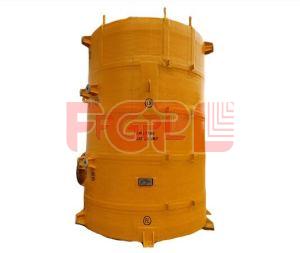
| Shape | Cylinder Shape |
| Pressure | 15-30bar, 30-45bar |
| Click to view more | |
Product Details
Feature
High Quality, Rust Proof, Stable Performance
Country of Origin
India
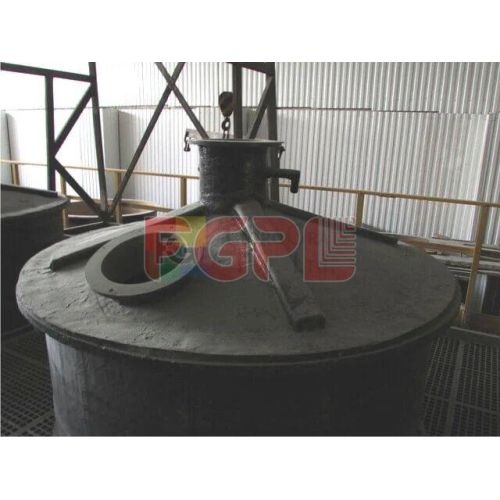
Best FRP Reaction Vessels Manufacturer in India: Quality Chemical Process Solution
These products are made of fiber-reinforced plastic in FRP storage tanks. It is primarily a brand-new composite material created by a machine run by a microcomputer, using resin as a powerful adhesive and glass fiber as a reinforcing agent.
FRP (Fiberglass reinforced plastic) storage tanks possess qualities such as being anti-corrosive, highly durable, lightweight, and long-lasting. They can be flexibly designed and employed in various industries, including chemical processing, environmental conservation, food, pharmaceuticals, etc., thanks to their versatile design ability and ease of processing. Gradually, they are displacing carbon steel and stainless steel in many market segments. When sourcing FRP storage solutions, it’s crucial to partner with reliable FRP reaction vessels manufacturers who can ensure quality and adherence to industry standards. These manufacturers offer expertise in crafting custom FRP vessels tailored to specific industrial needs, guaranteeing efficiency, safety, and longevity.
Dependable and efficient equipment is essential in today’s industrial environment. The top FRP reaction vessels manufacturer in India play a crucial role in industrial operations by offering dependable and long-lasting solutions for a range of applications. As one of the leading producers of FRP reaction vessels in India, we understand how critical performance and quality are in meeting the diverse demands of various sectors.
Applications
FRP reaction vessels manufacturer in India are widely used in many different sectors both in India and around the world. These containers are essential to the safe mixing, storing, and reacting of chemicals during chemical processing. They are also used in air pollution control systems and wastewater treatment plants, among other environmental conservation initiatives. FRP vessels are also used in the food industry for processing, storing, and fermentation purposes. These containers are essential to the chemical synthesis, purification, and formulation processes involved in the production of pharmaceuticals.
Examples Of Applications Within Each Industry Include
Reaction vessel manufacturers in India are essential for guaranteeing product quality and process efficiency in each of these industries since they provide remarkable resistance to chemicals, corrosion, and extreme environmental conditions. Being one of the top producers of FRP reaction vessels in India, we provide high-quality, customizable solutions to meet the various needs of these sectors.
Advantages of FRP Reaction Vessels
Compared to conventional materials like metal, FRP reaction vessels have the following advantages:
Durability
Customization Options
Corrosion Resistance
Lightweight Design
Manufacturing Process- Unveiling The Strength Of FRP
The Procedure Used in the Production of FRP Reaction
Resin and Glass Fiber: The Power Couple
The interplay between glass fiber and resin is what gives FRP its charm.
Advanced Techniques for Enhanced PerformanceAlthough the fundamental procedure stays the same, certain producers apply cutting-edge methods to improve the functionality and caliber of FRP vessels:
Looking for "FRP Reaction Vessel" ?
Piece